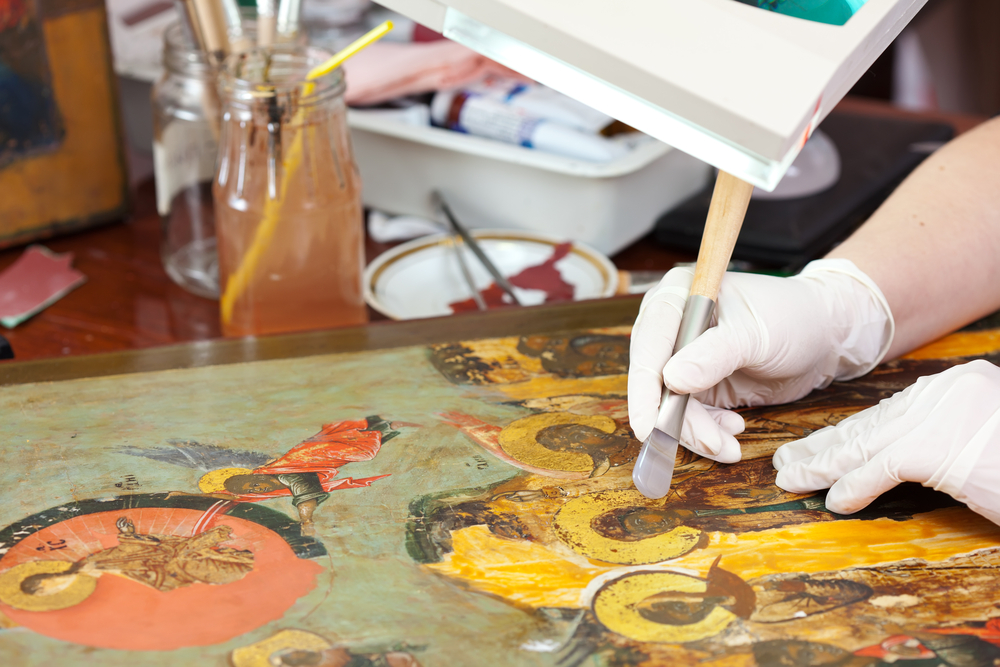
Even though very beautiful to have in your home or office as part of your interior design, art prints are delicate and fragile in nature and will need to be restored eventually in order to maintain or even regain their original quality and appearance. There are several efficient steps that can be taken to complete this process within a fraction of the time it used to require years ago in order to make sure that your prints remain beautifully detailed and long-lasting. Step #1
Make sure to examine each print closely because you are going to need to identify exactly where the damage has taken place. Analyzing the damage will help you to formulate an effective plan in restoring it accordingly. You can soften folds and wrinkles quickly by wetting the actual paper and pressing it between two blotting paper sheets. Keep in mind that you will not be able to remove a lot of signs of wear and tear - such as creases - but you will be able to minimize their overall visibility. Step #2
You can repair rips and tears by gluing paper to the back of the prints, allowing you to efficiently cover all holes within the actual print itself. Using a combination of citric acid and water will allow you to eliminate any ink marks. Many people are unaware that compressed bread crumbs can even remove pencil markings and cause everything to be smooth and the same color once again. There is a wide variety of other impressive tactics that can be used in this regard in order to make sure that you have everything you need to get the job done right the first time around without causing any unnecessary damage to the art print itself. Step #3
Make sure that the art print is thoroughly cleaned, especially if it has been exposed to dust or smoke because these things can cause permanent damage to the print if left unattended. Placing the prints between sheets of paper before applying fungicide can also effectively disinfect them. Make sure that you thoroughly check the art print after you have completed these steps and identify whether any other areas need to be corrected.
 By Jane Dixon