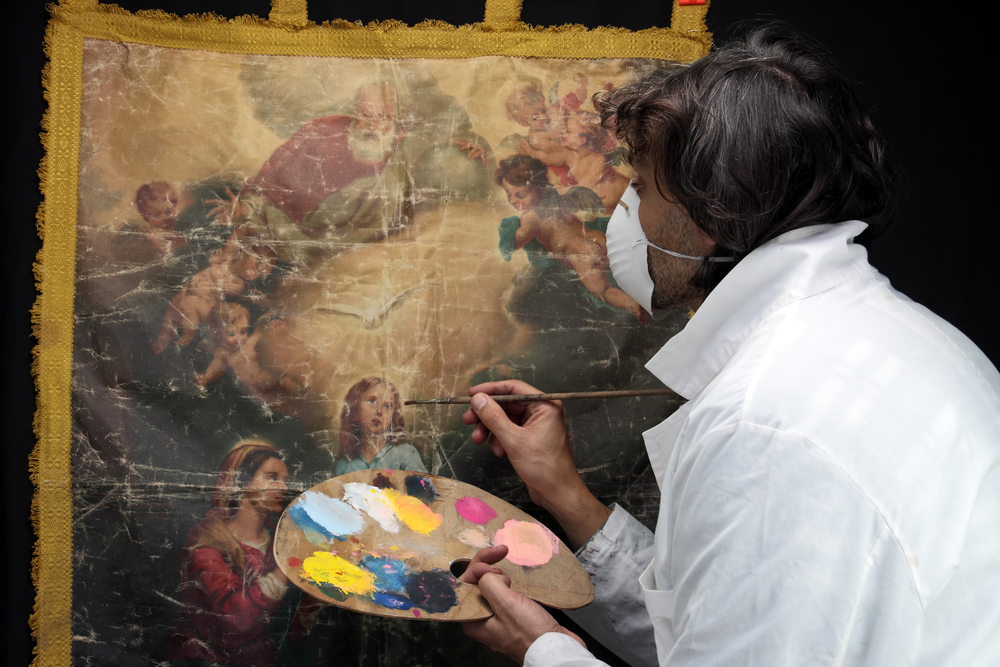
If you're not a restoration expert, but you plan on restoring a painting or composition of an artwork by yourself, you should make sure that you are working with an inexpensive art piece. Becoming an expert requires years spent training and lots of specialized tools. If you don't have these things, you're likely going to harm the painting further. If you are working with an art piece on paper, you might be able to complete some minor repairs. Here's how it's done. Step 1
Make sure that you’re caring for your artwork properly as this will decrease the odds that you’ll need to get it repaired later on. You should only use acid-free mats and other materials for framing to avoid damaging the painting. Ensure that the painting/picture isn't touching the glass at any point and ensure the painting is sealed off. Step 2
Clean your photograph or painting very carefully. Have someone help you and use a light vacuum to get rid of any debris or small molecules. You can use a stiff brush to get rid of any dust or dirt build-up. If you're repairing an oil painting or acrylic painting, apply a damp rag to get rid of spots. Kindly note that you are unable to use any form of water or damp cloth with watercolor painting but and eraser will work. Step 3
By using paint consolidator, you can consolidate any arrears of the painting that might flake off. Make sure that you get some of this solution into the cracks or flakes of the painting and push down on these areas with a knife to solidify them. Step 4
If the painting is attached to an acidic mat board, you should remove it. Use a humidifier to make it easier to remove the backing products. Step 5
Use a hobbyist’s knife to remove any type of tape from the artwork and make sure that you don’t cut the artwork. Use an eraser to clean these areas up and take off the last of the adhesive. Japanese tissue paper and wheat paste can reinforce the areas that have been badly torn. Step 6
If the composition of paper that your artwork is on is in bad form, you should attach a bit of stronger paper, either Japanese mulberry or rag paper to the back to fortify it. Attach this second sheet using an adhesive used for archival work and ensure to avoid buckling. Step 7
Use a humidifier to loosen up the slice of paper that your artwork is on and then place under blotters and a heavy weight. This should flatten the artwork and get rid of noticeable creases caused by moisture in the environment.
 By Shaun Kirkpatrick