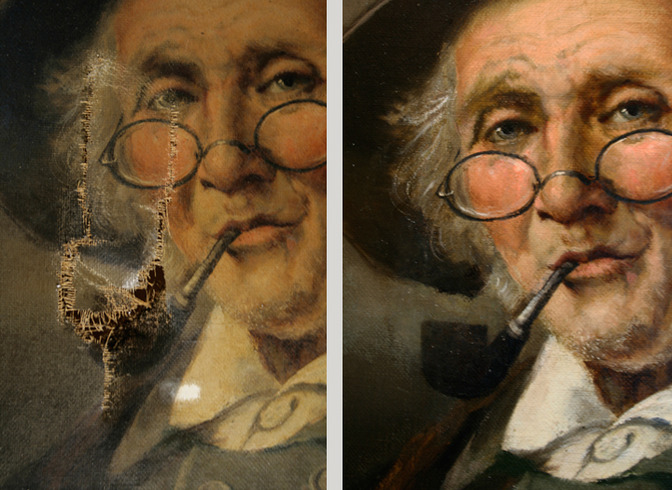
The ravages of time can have its effect on quality artwork. Extreme temperatures, improper storage, dust and dirt and negligent handling can really contribute to a faded work of art. When you learn how to mix colors properly you can participate in restoring your own artwork back to its original beauty. This process is vital in protecting your artwork from further destruction. Step 1
Go to a craft or art supply store and pick up a color wheel. This is an important part of creating the right colors to match up to your artwork. It will ensure that you are able to work closely with the right primary and secondary colors so you can create the best hues for the restoration. Step 2
Try out different ways of painting on a selection of surfaces and textures that may be similar to the artwork that needs to be restored. For example, an air brush creates a lighter effect that is controlled by your application. Even though using a paintbrush has only one look, it can appear differently when you use it on a range of surfaces, from smooth to coarse. Make sure that you experiment until you are comfortable with the process before you begin to work on the actual piece of artwork. Step 3
Make sure you test your colors before applying them to the artwork. Find a material that is similar to the art and try the colors out so you can see what it's going to look like. It will take a lot of time to learn how to get colors mixed properly, but in the long run it will pay off. Test each color before you move on to the next so that you don't have to go back and correct an entire painting. Step 4
Make sure you take into account the lighting. There's nothing that will affect the way the colors look than the way the light hits the artwork. Incorporate several different forms of light when mixing your colors so you're not limited to one.
 By Lila McDowell